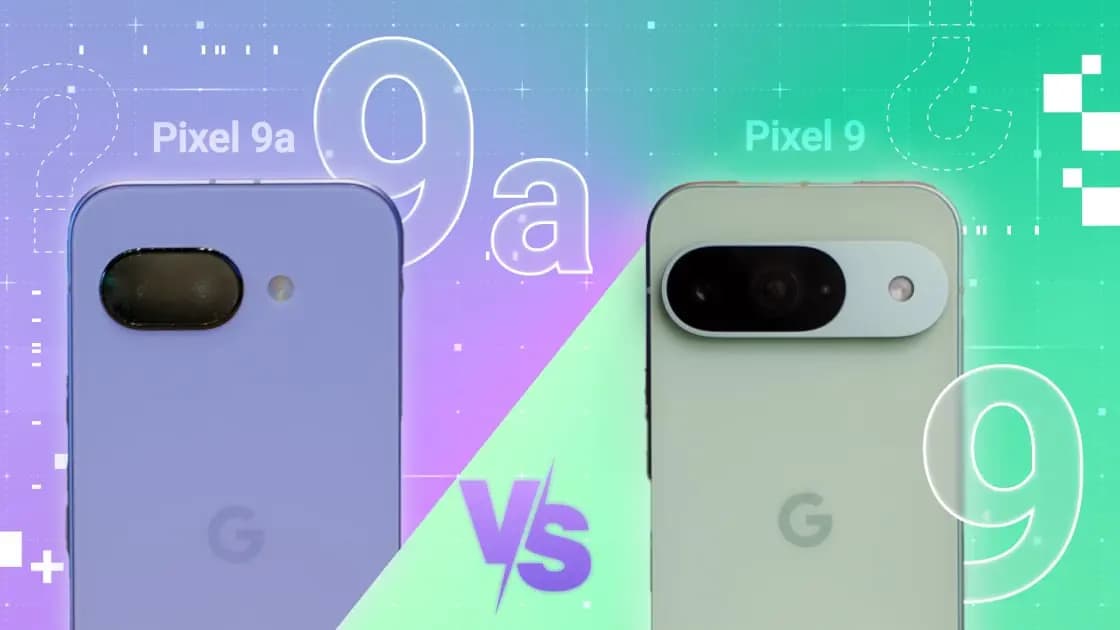
Google’s upcoming midrange smartphone, the Pixel 9a, has finally been shown. It seems like a great deal on paper: you get a Tensor G4 chipset, a sizable 5,100 mAh battery, and a high-quality aluminum and plastic construction for $500.
You may be asking why you would pay $300 more for the basic Pixel 9 when the 9a has so many advantages. However, a lot of capabilities that are unavailable on the 9a are still available on Google’s 2024 flagships. The Pixel 9 has the following five features, while the 9a does not.
With the Pixel 9a, Google is continuing its tradition of using plastic for its midrange Pixel phones. While the standard Pixel 9 has a glossy glass back and stainless steel side rails, the 9a has a plastic back panel with aluminum side rails.
However, that is not necessarily a bad thing for the 9a. Google’s new midranger feels good, according to AP’s Stephen Radochia, who also noted that the phone has a frosted texture on the plastic rear, giving it “a premium look and feel.”
Nevertheless, the standard Pixel 9 has a more upscale structure than the new Pixel 9a, thanks to its glass and stainless steel construction. The standard Pixel 9 has a little more personality than the 9a because it also has the recognizable pill-shaped camera bump.
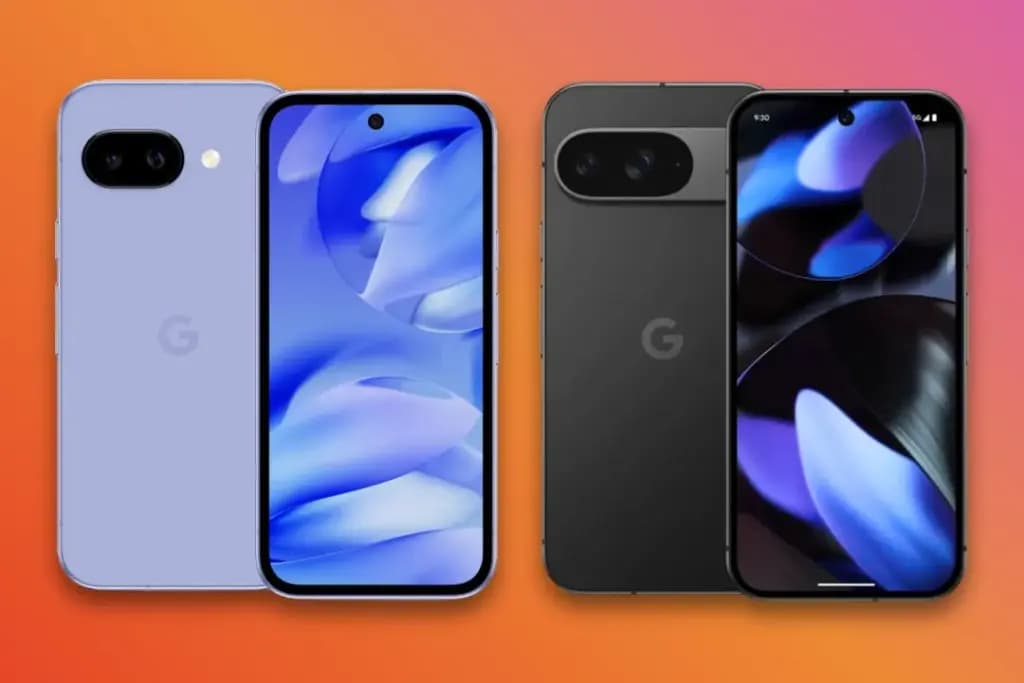
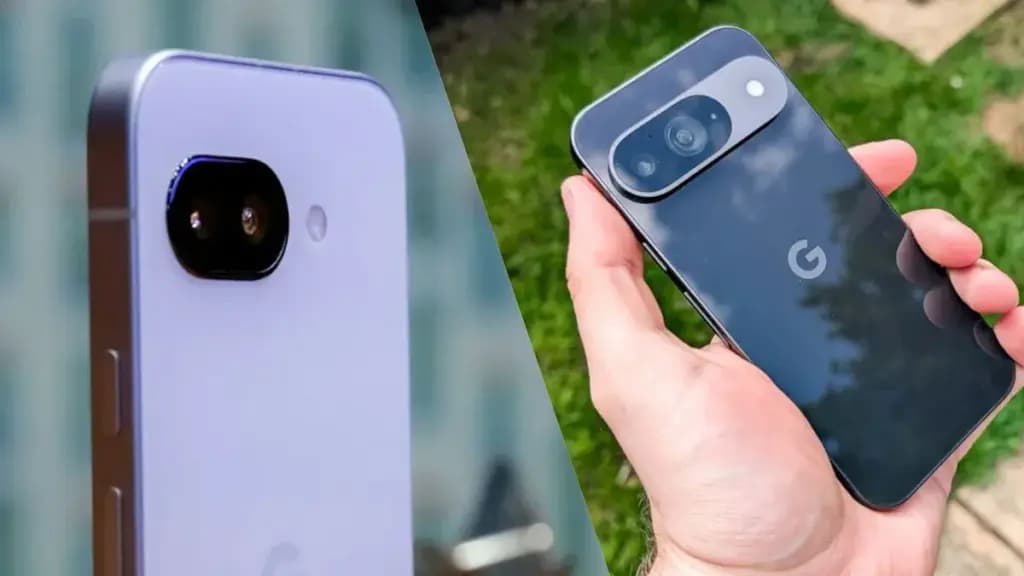
The cameras are the primary visible distinction between the Pixel 9 and Pixel 9a. Whereas the cameras on the Pixel 9a are nearly flat with the phone’s rear, the Pixel 9 boasts a large, thick, pill-shaped camera bar. Better cameras are housed in the 9’s large camera bar than in the 9a.
The Pixel 9 features a 48 MP f/1.7 ultrawide camera in addition to a 50 MP f/1.7 primary camera. The new Pixel 9a features a 13 MP f/2.2 ultrawide and a 48 MP f/1.7 primary camera. The standard Pixel 9 will undoubtedly have the advantage, but those figures do not fully capture the situation. We will have to wait to test the 9a’s cameras to see how they perform.
After four generations of Pixel phones with eight gigabytes of RAM, the Pixel 9 features 12 gigabytes. In contrast, the Pixel 9a continues to use 8 GB. For most users, that will still be more than enough, although the ordinary Pixel 9 has far more RAM than the 9a.
This memory disparity also affects on-device AI capabilities. Instead of using the Gemini Nano XS model seen on the regular Pixel 9, the Pixel 9a will use the Gemini Nano XXS variant. While the 9a’s Gemini Nano XXS model can only interpret text input, the Pixel 9’s more powerful on-device AI can handle multimodal inputs.
In comparison to other Android flagships, none of Google’s phones charge very quickly; nevertheless, the ordinary Pixel 9 outperforms the Pixel 9a in this regard. Depending on the charger you are using, the Pixel 9 can be charged wirelessly up to 15 watts and tethered up to 27 watts. In contrast, the Pixel 9a has a maximum wired charging capacity of 23 watts and a maximum wireless charging rate of 7.5 watts.
Ultrasonic fingerprint scanners on the Pixel 9 and Pixel 9 Pro use sound waves to detect the surface of your fingertip. The Pixel 9a has an optical fingerprint sensor that uses light to optically scan the surface of your fingertip. Ultrasonic sensors are quicker and more precise than optical ones, but pixel phones’ optical sensors have always been fine. Even though it is a minor benefit, the basic Pixel 9’s ultrasonic sensor nonetheless gives it an edge over the Pixel 9a.
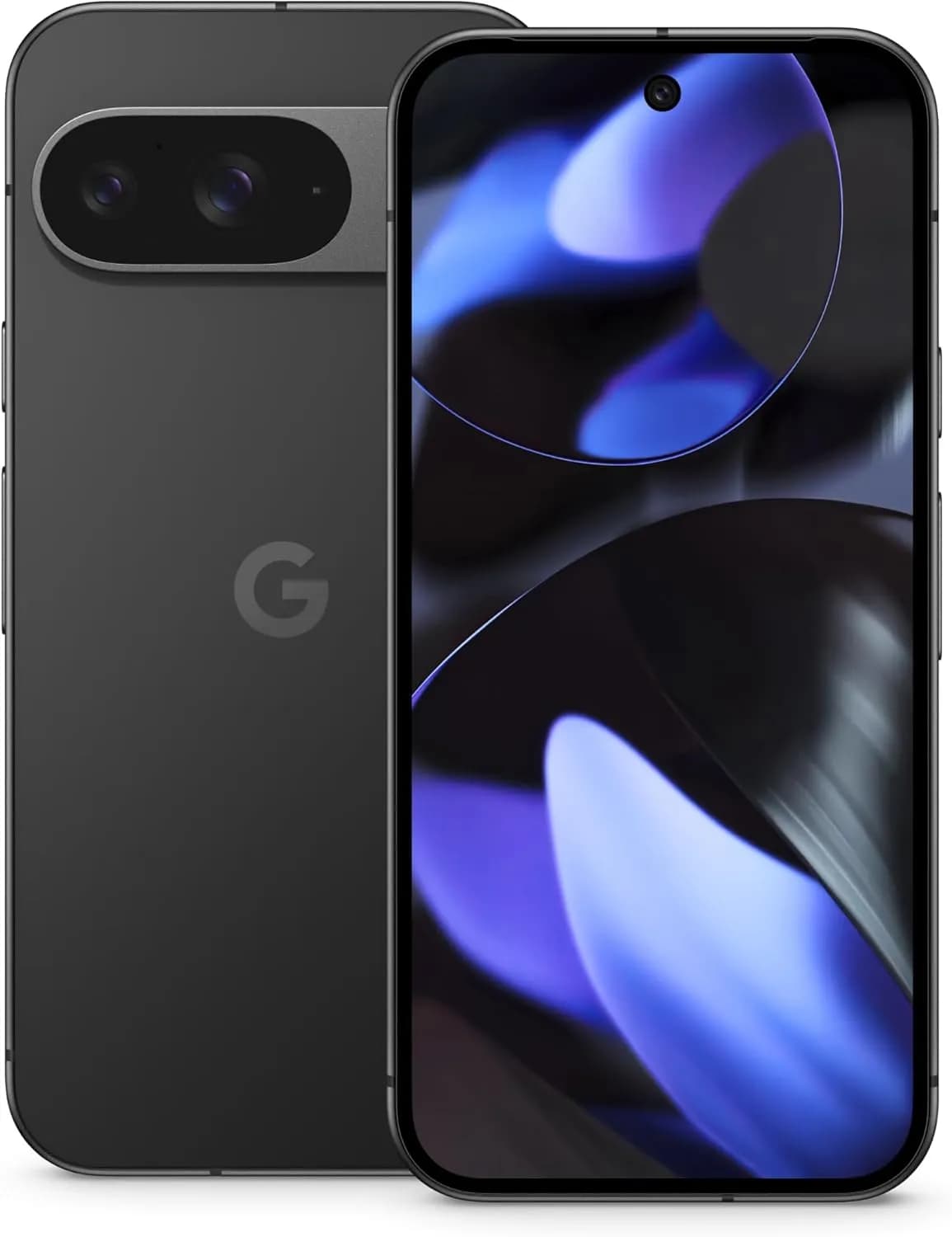
In many important aspects, the Pixel 9 and Pixel 9a appear to be fairly similar on paper, and the 9a even has several advantages over the standard 9. Naturally, there are a few features that the more costly 9 has that the 9a does not. It is too early to tell how much these improvements will matter to most users because we have not had a chance to test the 9a. In the coming weeks, we will have more to say on the comparison between the 9 and 9a.

Robert Haba is the founder and editor-in-chief of Droid Tools. A lifelong gadget enthusiast with over a decade following the Android ecosystem, he built this publication to cut through the noise and give readers honest, real-world coverage of the tech they actually use.

Google's Pixel 11 is a very good phone, but it is not a very new one. That is the takeaway from WIRED reviewer Simon Hill, who scored the $899 handset 8/10 and called it a slick, refined step forward from the Pixel 10, though only a small one. The short version If your phone is […]

The Honor Win2 series, made up of the Win2, Win RT2, and Win Turbo 2, is scheduled to launch in China next week. Honor revealed the designs and color options of all three phones yesterday, and it has now confirmed several of their key specifications. Honor has confirmed that the Win2 will run on the […]

Samsung is reportedly bringing three upgrades to the Galaxy S27 Ultra display next year: DC dimming, the M16 panel, and fixes for the Privacy Display introduced on the Galaxy S26 Ultra. The phone already sounds appealing on paper, and a redesign will probably drive more sales, but these screen changes are tangible improvements users should […]
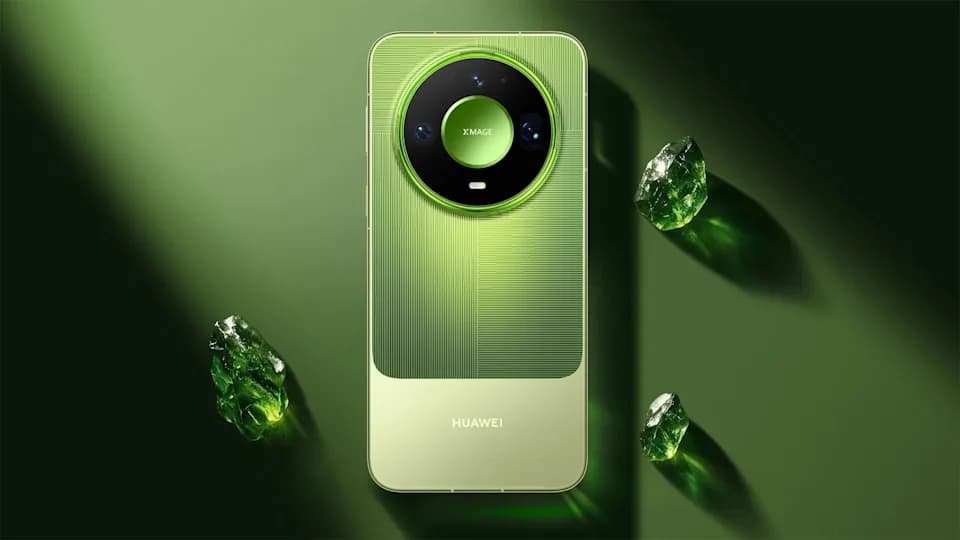
Huawei has officially unveiled the Huawei Mate 90 Pro in China, a new flagship that starts at ¥6,999 for the base 12GB + 256GB model. The phone pairs a Tandem OLED display with 12,000 nits of local peak brightness, the new Kirin 9035 processor, a 50MP variable-aperture main camera, eSIM satellite communications, and a 6600mAh […]
The next story loads as you reach the end. You can also load it using the button.


Comments & Discussions
Join the conversation! We use Disqus to handle comments. Click the button below to load the comment section.