
Huawei took the wraps off HarmonyOS 7 at its Huawei Developer Conference (HDC) on June 12, 2026. The new OS update spans smartphones, tablets, PCs, wearables, and IoT devices, with Yu Chengdong – Huawei’s Executive Director, Chairman of the Product Investment Review Committee, and Chairman of the Consumer Business Group – officially announcing the update with a focus on a smarter, more personalized user experience across the HarmonyOS ecosystem.
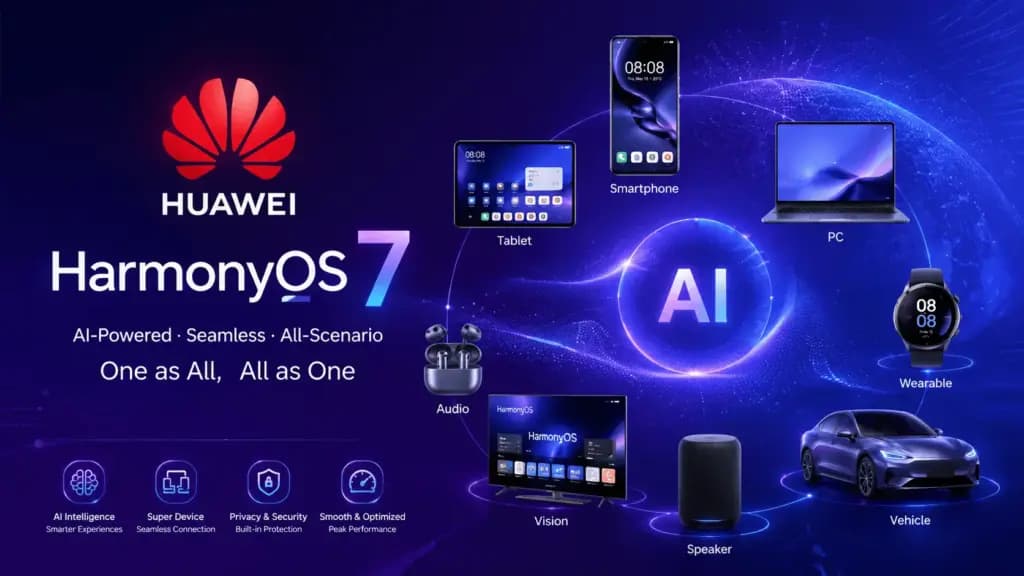
The most visually striking addition is spatial personalization. Using the device’s hardware capabilities, HarmonyOS 7 can convert scenes into 3D effects rendered directly on the phone’s display. The most immediate example is on the lock screen, where the wallpaper and UI elements combine to create a depth-enhanced 3D presentation.
System UI elements – sliders, buttons, and similar controls – are also getting a new immersive light effect that draws comparisons to Apple’s liquid glass design aesthetic. Huawei’s implementation is described as slightly more interactive and intuitive, though the visual direction is clearly similar in spirit.
Agentic AI is positioned as the next major phase of the HarmonyOS software ecosystem, and HDC 2026 placed significant emphasis on what HarmonyOS Intelligence can now do. The built-in AI assistant is gaining expanded generative AI capabilities, enabling it to produce a broader range of text content, retrieve real-time information faster, and execute system-level tasks. Huawei says the assistant’s integration has been deepened to support more in-app commands, pushing it well beyond the scope of a conventional voice or chat assistant.
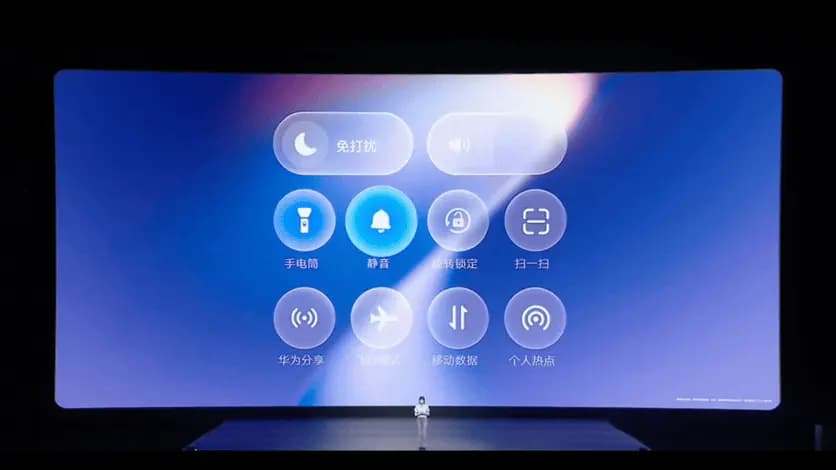
AI is also touching the photos and personalization side of the OS, with new editing tools and customization options making their way into the system settings.
Under the hood, Huawei has implemented the HarmonyOS Intelligent Agent Framework 2.0, built around intent-as-a-service architecture, which Huawei claims delivers a task execution success rate of over 90%.
Performance has also received a substantial lift. Across all the new improvements combined, HarmonyOS 7 delivers more than a 15% performance increase compared to HarmonyOS 6.1. That improvement is tangible across everyday use cases – app launches, gaming, and online streaming all benefit from the gains.
The HarmonyOS 7 developer beta launched on the same day as the announcement for eligible devices, with the full public release scheduled for this fall.
Google Pixel Watch 5 (45mm)

Luiza Mosneagu is Reviews Editor at Droid Tools. A psychologist by training and tech writer by passion, she has tested over 60 Android devices since 2020 - always for a minimum of two weeks before writing a word. Her focus is camera quality, everyday usability, and cutting through marketing claims to tell you what a device is actually like to live with.

Android Auto redesign clues emerge in the 18.0 beta update, with code pointing to a new launcher asset under the Cielo codename.
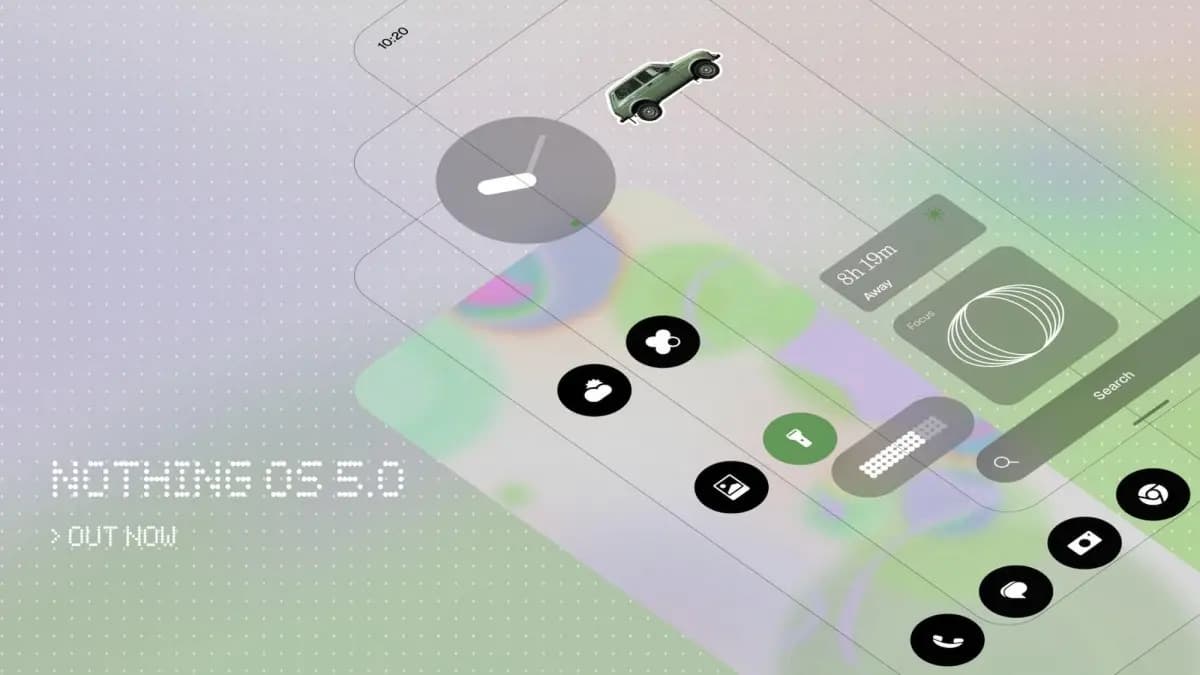
The Nothing OS 5 update brings Android 17 to Phone 3 users in a staggered rollout, adding the Geist font, AI upgrades, and a dedicated Glyph app.

Oppo has announced the ColorOS 17 upgrade, based on Android 17, for the smartphones of its parent group BBK Electronics, including OnePlus and Realme. OnePlus already announced a beta upgrade to ColorOS 17 for its OnePlus 15 flagship, and the Realme ColorOS 17 update is now on the way too. It brings a completely new […]
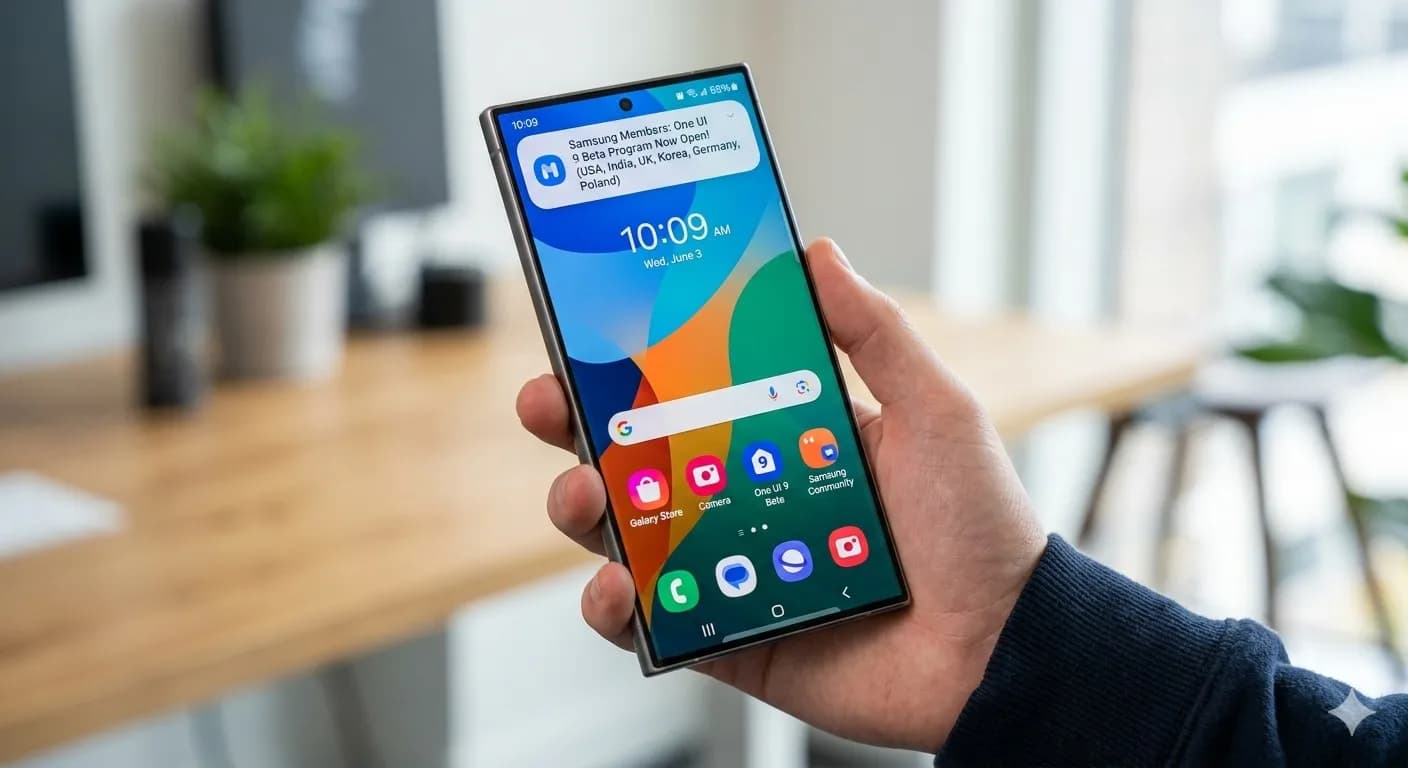
Samsung has started rolling out the Galaxy S23 One UI 9 update based on Android 17, starting with beta testers in South Korea.
The next story loads as you reach the end. You can also load it using the button.


Comments & Discussions
Join the conversation! We use Disqus to handle comments. Click the button below to load the comment section.