
Recently, Qualcomm unveiled the Snapdragon 8 Gen chipset. The flagship platform, which uses the 4nm process, is primarily focused on advances in AI, gaming, audio, and cameras.
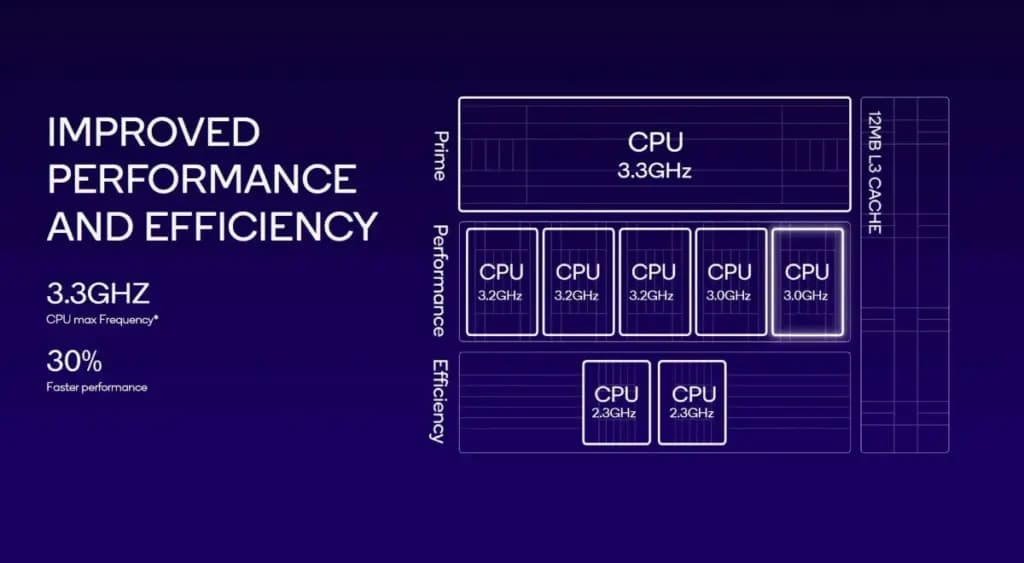
In terms of crucial percentages, Gen 3 outperforms Gen 2 by 20% and by 30% in terms of speed. One Cortex-X4 prime core with a maximum frequency of 3.3 GHz, five performance cores with a maximum frequency of 3.2 GHz, and two efficiency cores with a maximum frequency of 2.3 GHz highlight the eight-core CPU inside. Up to 24 GB of LPDDR5x memory can be supported at 4800 MHz. Supported Wi-Fi 7 frequencies up to 6 GHz are 802.11be, 802.11ax, 80211ac, and 80211a/bg/n. The chip has an X75 5G modem with mmWave and sub-6 GHz antennae.
With the Snapdragon 8 Gen3, AI is the main feature. The AI Engine is the first component in the process; it can process up to 20 tokens per second to provide immediate AI assistant replies. It supports both popular big language models for speech recognition and multi-modal generative AI models. According to Qualcomm, the Snapdragon 8 Gen 3 has the quickest steady diffusion in the world, producing an image in a split second.
To improve AI assistant replies, Qualcomm’s Sensing Hug securely accesses personal data such as location, fitness state, and preferred activities.
AI also improves the capabilities of the camera. Real-time Semantic Segmentation can improve an image’s brightness and detail, while Night Vision video can light up a dimly lit area. Vlogger’s View, which records video from both your back and selfie cameras, has an object eraser for films that may be used to remove unpleasant individuals or things. In addition to automatically improving HDR, Picture Expansion can employ generative AI to stretch an image beyond the original acquired data.

On 240 Hz monitors, the Snapdragon 8 Gen 3 can produce “console-defying” gaming performance at 240 frames per second. Adreno Frame Motion Engine 2.0 supports Unreal Engine 5.2 and may produce frames for better playback.
The Snapdragon 8 Gen 3’s GPU offers 40% improved Ray Tracing along with 25% faster and 25% higher power efficiency.
The fact that the new chip can stream 24-bit, 96-kHz lossless music via Bluetooth will please audiophiles.
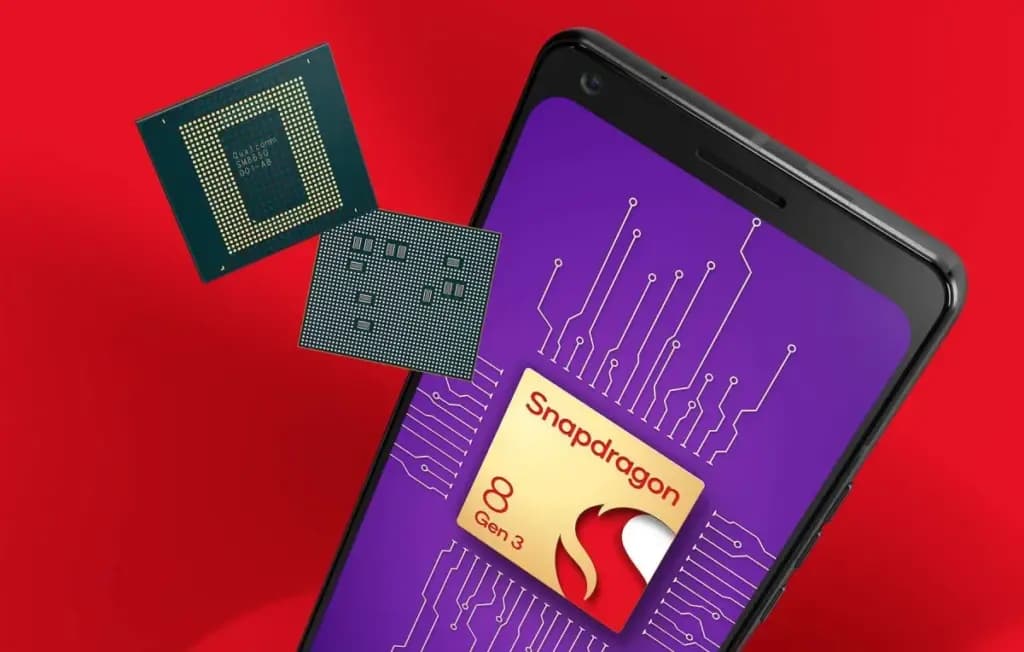
Qualcomm says devices powered by the new Snapdragon 8 Gen 3 will be available in the coming weeks. The chipmaker has partnered with Asus, Honor, iQOO, Meizu, Nio, Nubia, OnePlus, Oppo, realme, Redmi, RedMagic, Sony, vivo, Xiaomi, and ZTE.
Google Pixel Watch 5 (45mm)

Robert Haba is the founder and editor-in-chief of Droid Tools. A lifelong gadget enthusiast with over a decade following the Android ecosystem, he built this publication to cut through the noise and give readers honest, real-world coverage of the tech they actually use.

Google is upgrading Android scam detection across Messages and calls, using Gemini models and new on-device checks to flag suspicious links and phone scams.

Shoppers who buy low-cost Android phones from online marketplaces may be getting malware that was planted on the device before it ever reached them, Bitdefender has found. The Midnight Mimosa malware campaign runs on budget Android phones from several brands built on MediaTek platforms. The malicious code ships inside the firmware, is already there when […]

Bitdefender has discovered and analyzed a campaign dubbed Midnight Mimosa, in which malware comes preinstalled in the firmware of low-cost Android devices built on MediaTek platforms. The infection is persistent, runs as a pre-installed firmware system app, and can’t be removed through normal uninstall procedures. Anyone who switches on an affected device finds the malware […]

The Galaxy S27 Ultra display may avoid the compromises that held back its predecessor, according to a PhoneArena opinion piece. The writer cites an industry insider who said during a Q&A session on X (formerly Twitter) that Samsung is going to improve the display quality that suffered on the Galaxy S26 Ultra. What went wrong […]
The next story loads as you reach the end. You can also load it using the button.


Comments & Discussions
Join the conversation! We use Disqus to handle comments. Click the button below to load the comment section.