
Samsung says the Galaxy Z Fold8 is now the world’s lightest foldable smartphone, weighing just 201 grams – a milestone the company traces back through eight generations of foldable engineering, starting with the original Galaxy Fold’s 276 grams in 2019.
According to Samsung, the weight reduction has been a steady, generation-by-generation effort: the Galaxy Z Fold5 weighed 253 grams, the Galaxy Z Fold6 dropped to 239 grams, and with the Galaxy Z Fold7, Samsung set an especially ambitious internal target. At the time, the Galaxy S25 Ultra, one of Samsung’s flagship bar-type phones, weighed 218 grams, and Samsung’s development team aimed to make the Fold7 even lighter, at 215 grams – a goal the Fold7 ultimately reached. The Galaxy Z Fold8 builds on that with a new form factor and advances across core technologies, materials, and internal architecture, landing at 201 grams, or 52 grams lighter than the Fold5.
Samsung says the push for a lighter device wasn’t just an engineering vanity project. A 2024 YouGov survey found that a bulky or heavy design remained a top concern among people not planning to buy a foldable, while battery life, durability, and display quality were the top priorities for those who were considering one. That data shaped a core goal for Samsung’s engineers: make foldables thinner and lighter without sacrificing the experiences people already valued, including battery life, camera performance, thermal management, and durability.
Samsung says that kind of improvement couldn’t come from changing a single part. Instead, it required rethinking the entire device, from fundamental foldable technologies to new materials, down to hundreds of components and auxiliary parts refined to fractions of a gram. Samsung points to three main engineering innovations behind the jump from 253 grams to 201 grams.

Samsung says making a foldable thinner and lighter introduces its own set of engineering problems. The layers inside the display need to get thinner while still meeting durability and reliability requirements, the metal plate supporting the display needs to stay extremely flat even as it thins out, and the hinge has to manage the forces created every time the device folds and unfolds, all while being tailored to the size and structure of each specific product.
One example Samsung points to is Flex Titanium, used in the displays of both the Galaxy Z Fold8 and Galaxy Z Fold8 Ultra. It’s built around a Titanium Alloy Film that Samsung says is just tens of micrometers thick, or roughly one-third the width of a human hair, with a material and structure designed to maintain performance at that extreme thinness.

The metal plate supporting the display presented a different challenge. Samsung says some of its metal plates are machined to around 0.2 millimeters thick, with the thinnest sections reaching 0.15 millimeters, and at that scale, simply making the metal thinner isn’t enough on its own, since thin metal can bend or warp more easily during machining, and even small shape changes can affect assembly precision or the display’s surface quality. Samsung says the goal was machining ultra-thin metal at around 0.2 millimeters while still consistently hitting the required shape and flatness, which it achieved by refining the machining sequence, tooling, cooling conditions, and process parameters, and by breaking the process into multiple stages.
The hinge required similar care. Beyond simply opening and closing the phone, Samsung says it has to distribute the forces created by repeated folding and unfolding across the device while keeping everything structurally stable, and those requirements change depending on the size and architecture of each product. Rather than scaling one generation’s hinge down for the next, Samsung says it engineers the hinge separately for each form factor, balancing load distribution, strength, durability, internal space, and weight. According to Samsung, building a thinner and lighter foldable ultimately comes down to more precise machining, better force management, and smarter structural design within a limited amount of space.
The second area Samsung highlights is materials innovation. Different parts of a foldable have different jobs, the company notes: some need high rigidity, some have to withstand repeated movement, and others need to spread heat efficiently, so Samsung selects and develops materials suited to each of those specific needs while trying to optimize weight and space.
Flex Titanium and its Titanium Alloy Film support the foldable display structure in both the Galaxy Z Fold8 and Galaxy Z Fold8 Ultra, as mentioned above. For the exterior, Samsung uses what it calls Advanced Armor Aluminum, intended to provide strength and durability within a thin, lightweight frame.

Materials also play into thermal management. As a device gets thinner, Samsung says there’s less internal room to manage the heat it generates, so it uses graphite with improved thermal performance and tailors the overall thermal structure to each product’s size and performance needs. In the Galaxy Z Fold8 Ultra, which shares similar overall dimensions with the Galaxy Z Fold7, Samsung increased the volume of the graphite heat-dissipation layer by approximately 7% to support the newer model’s higher performance.
Samsung also uses Clad Metal on the rear of the device, combining the properties of different metals to help cut weight while still delivering the thermal performance needed in a thin structure. Samsung frames its materials strategy as being less about picking the lightest option available and more about using the right material in the right place to hit each part’s performance target with as little weight and space as possible.
Samsung says core technologies and new materials alone could only go so far. In an already densely packed foldable, finding additional grams to shave off meant re-examining nearly everything inside the device, and Samsung’s engineers reviewed approximately 270 components and more than 180 types of auxiliary parts, spanning the display, hinge, cameras, circuit boards, antennas, brackets, tapes, and fasteners. Samsung says the resulting precision extended down to reductions of 0.1 grams and 0.1 millimeters, and in some auxiliary parts, cuts as small as 0.001 grams.
The printed circuit board was redesigned to remove unnecessary circuits, improve component layout, and shrink its overall footprint, and the MFC (Magnetic Flux Channel) antenna was reworked to cut unnecessary overlap and interference with surrounding components, freeing up limited internal space for more efficient use.
Every auxiliary part, however small, got the same scrutiny. Of the more than 180 types Samsung previously used, approximately 15 were eliminated outright, and engineers reviewed the remaining roughly 170 types, trimming oversized sections, refining shapes, optimizing dimensions, and consolidating multiple parts into single structures where possible. In some cases, Samsung says, the savings amounted to increments as small as 0.001 grams each – individually minor, but compounding across the device from fractions of a gram into tenths of a gram, and eventually into whole grams. According to Samsung, the total weight savings on a finished device come from hundreds of small engineering decisions like these rather than any single breakthrough.

Samsung’s goal, according to the company, was to reinvest the weight and space recovered through this process back into the features people actually notice, like battery capacity, cameras, and thermal performance. The Galaxy Z Fold8 Ultra offers a concrete example of how that played out.
The Galaxy Z Fold8 Ultra shares similar overall dimensions with the Galaxy Z Fold7, and both weigh 215 grams, but within that same weight budget, Samsung increased the Fold8 Ultra’s battery capacity from 4,400 mAh to 5,000 mAh. That larger battery added roughly 6 grams on its own, which meant Samsung’s development team had to find those 6 grams somewhere else in the device.
There wasn’t a single component that solved the problem, according to Samsung. Instead, engineers applied the same systematic approach across the whole device, covering materials and structures, circuit layouts, component placement, and the smallest auxiliary parts, looking for weight savings everywhere they could find them. That extended to internal space optimization too: by cutting unnecessary overlap between the display, circuits, antennas, and surrounding components, and by improving overall packaging efficiency, Samsung made room for the larger battery along with an enhanced thermal system and camera setup.
As a result, the Galaxy Z Fold8 Ultra fits a 5,000 mAh battery while also increasing the volume of its graphite heat-dissipation layer by approximately 7% compared with the similarly sized Galaxy Z Fold7. The Fold8 Ultra also features a 200MP main camera and introduces the first 50MP Ultra-Wide camera on any Galaxy Z Fold device. Samsung frames this as proof that its approach to thinner, lighter foldables isn’t about cutting capabilities, but about redirecting the weight and space it recovers toward the features flagship buyers actually care about.
Samsung’s foldable weight story began with the original Galaxy Fold at 276 grams in 2019, and across eight generations, the company says it has kept advancing the technologies, materials, and internal architecture behind the line. That progress has accelerated in recent years, dropping from 253 grams with the Galaxy Z Fold5 to 201 grams with the Galaxy Z Fold8.
But Samsung is careful to frame this as more than a story about shrinking numbers. The company’s stated goal has been to make a large-screen foldable easier to carry every day without giving up the qualities people expect from a flagship phone, and it says the weight and space recovered through its engineering, materials, and component work were funneled straight back into the battery, cameras, thermal system, and other experiences flagship buyers value most. No single material or component made the jump from 253 grams to 201 grams possible on its own, according to Samsung – it took eight generations of engineering, new materials, and a willingness to rethink the entire device to get the Galaxy Z Fold line this light without compromising what makes it a flagship.

Google Pixel Watch 4

Robert Haba is the founder and editor-in-chief of Droid Tools. A lifelong gadget enthusiast with over a decade following the Android ecosystem, he built this publication to cut through the noise and give readers honest, real-world coverage of the tech they actually use.

Android Headlines has published exclusive renders showing the Google Pixel 11a for the first time, following its earlier report on the phone under the codename “Formosan” back in January 2025. Google appears to be sticking with a design similar to the past two years, but the internals are getting a major upgrade this time: the […]

OnePlus has opened reservations for the OnePlus 16 in China, revealing the phone's design, color options, and memory configurations ahead of its official launch. The device succeeds last year's OnePlus 15, which OnePlus introduced in October 2025 as its flagship. Visually, the OnePlus 16 looks similar to its predecessor, with a square rear camera module […]
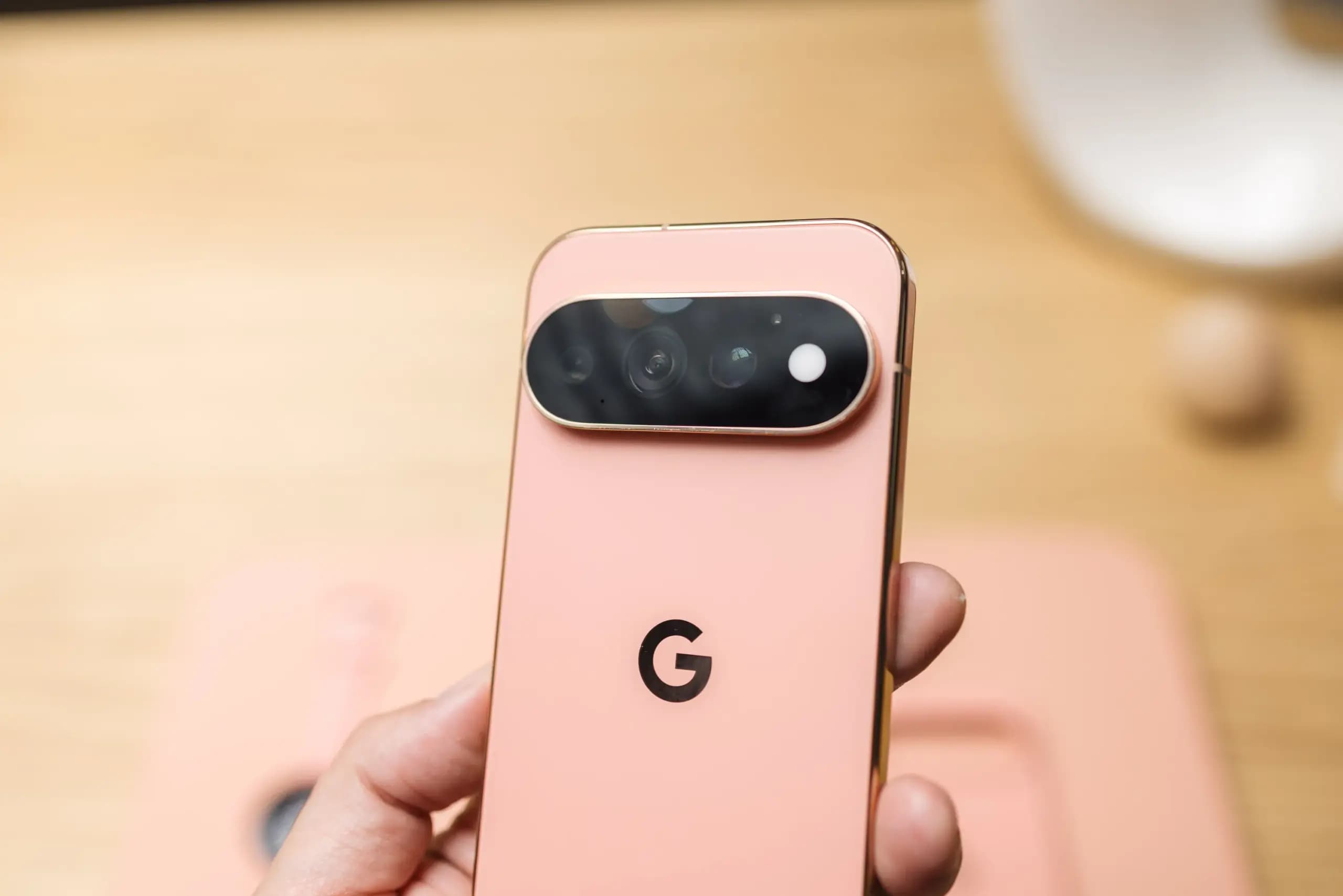
Google’s Pixel 11 series has arrived with Gemini and camera changes spanning daily assistance, voice entry, visual presets, and low-light shooting. As Android Central reported on Aug. 12, the headline Pixel 11 features extend Gemini Intelligence to more than 40 apps, bring new tools to Gboard, and make Instant Night Sight faster on the Pro […]

Amazon is bundling a Pixel Watch 5 at no extra cost with preorders of the unlocked Google Pixel 11 Pro Fold placed before the foldable’s Aug. 20 release. Patrick Farmer at Android Central highlighted the Pixel 11 Pro Fold preorder deal on Aug. 12, the same day Google announced its 2026 Pixel lineup. The promotion […]
The next story loads as you reach the end. You can also load it using the button.




Comments & Discussions
Join the conversation! We use Disqus to handle comments. Click the button below to load the comment section.