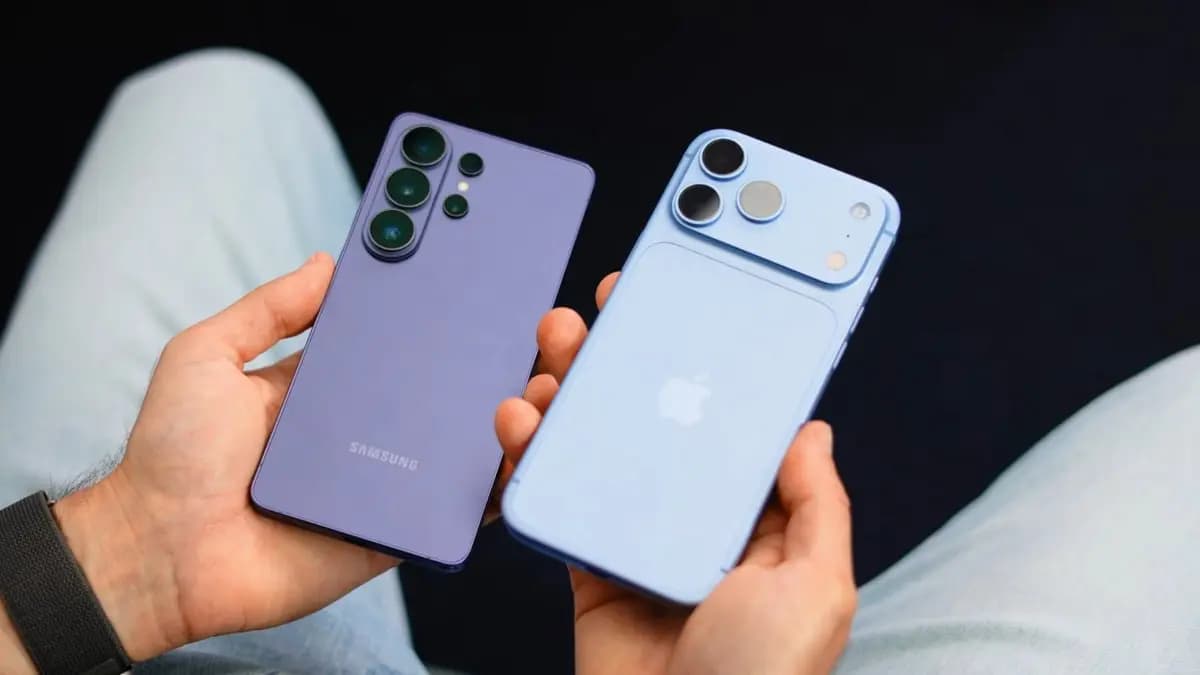

Global smartphone shipments fell 20 percent year over year in the third quarter of 2026, reaching a 14-year low driven by severe memory shortages. Samsung retained the market lead, while analysts warn that fourth-quarter shipment volumes may show no meaningful recovery.
Global smartphone shipments fell sharply in the third quarter of 2026, registering the steepest contraction the industry has recorded in more than a decade. Newly published data from Counterpoint Research shows that worldwide shipments dropped 20 percent year over year, reaching their lowest quarterly volume since 2012. Analysts identified an acute shortage of DRAM and NAND memory components as the main cause behind the downturn, with server demand from artificial intelligence infrastructure consuming vast supplies of silicon. Counterpoint senior analyst Shilpi Jain explained that “The extreme memory shortage is pushing the smartphone market into a more selective phase.”

Beyond component shortages, Counterpoint observed that “consumer behavior” has shifted significantly in response to rising prices and broader economic strain. Jain pointed out that “Consumers are holding on to their devices longer than estimated, increasingly considering refurbished devices and prioritizing higher-value devices.” As retail prices for premium phones frequently surpass $1,000, shoppers face a difficult choice between buying an expensive new device and keeping the hardware they already own. When a phone purchased one or two years earlier continues to handle daily needs, many users conclude that replacement costs are difficult to justify, leaving even the entry-level budget market on unstable ground.
Despite the widespread slump, Samsung managed to hold onto the first place spot worldwide. The South Korean manufacturer limited its shipment decline to 3 percent year over year, while expanding its overall market share by 23 percent. Counterpoint characterized this performance as “the largest share gain among major OEMs.” Analysts attributed Samsung’s relative stability to strong customer interest in its premium foldable releases, specifically the Galaxy Z Fold 8 and the Galaxy Z Fold 8 Ultra, accompanied by consistent shipment volumes from the mid-tier Galaxy A series.
Apple followed directly behind Samsung in second position, though its performance reflected significant pressure. Counterpoint pointed to Apple’s product strategy as a factor in the decline, noting that the iPhone 18 lineup arrived without a standard base variant, launching solely with the higher-priced iPhone 18 Pro and iPhone 18 Pro Max. Analysts suggested that omitting an entry-tier model contributed to lower sales volumes. Meanwhile, Chinese phone makers Xiaomi, OPPO, and Vivo completed the top five rankings, with each brand suffering steep year-over-year shipment drops.

Signs of turbulence had already surfaced earlier in 2026. In July, market research firm Omdia reported that the global handset market contracted by 4 percent year over year during the second quarter. While Samsung and Apple recorded second-quarter shipment gains of 2 percent and 4 percent respectively compared to rival vendors, Omdia noted that memory availability was already depressing overall output. At the time, Omdia cautioned that supply bottlenecks would cause continued friction throughout the third and fourth quarters, a forecast that aligned with the steep drop Counterpoint tracked in Q3.
Prospects for the fourth quarter of 2026 remain subdued across the industry, with Counterpoint stating that any meaningful recovery appears unlikely “until component costs and supply conditions improve.” Both Counterpoint and Omdia anticipate that the final months of the year will show little progress. Faced with elevated parts costs and weakening consumer demand, device makers are adjusting their strategies to emphasize “profitability over shipment volumes amid elevated component costs and weaker affordability.” Samsung is reportedly leading that retrenchment, requesting that suppliers reduce fourth-quarter handset production by 20 to 30 percent.
Google Pixel Watch 5 (45mm)

Cristian Penisoara is a Guides Writer and Android specialist at Droid Tools. An Android user since version 2 and a professional event photographer, he combines technical curiosity with a detail-oriented approach - every guide he publishes is tested step-by-step on a real device before it goes live.

Google is emailing a 30% Pixel 11 discount code to select Google AI Pro members, cutting up to $570 off the Pixel 11 Pro Fold without a trade-in.

Google is upgrading Android scam detection across Messages and calls, using Gemini models and new on-device checks to flag suspicious links and phone scams.

Shoppers who buy low-cost Android phones from online marketplaces may be getting malware that was planted on the device before it ever reached them, Bitdefender has found. The Midnight Mimosa malware campaign runs on budget Android phones from several brands built on MediaTek platforms. The malicious code ships inside the firmware, is already there when […]

Bitdefender has discovered and analyzed a campaign dubbed Midnight Mimosa, in which malware comes preinstalled in the firmware of low-cost Android devices built on MediaTek platforms. The infection is persistent, runs as a pre-installed firmware system app, and can’t be removed through normal uninstall procedures. Anyone who switches on an affected device finds the malware […]
The next story loads as you reach the end. You can also load it using the button.


Comments & Discussions
Join the conversation! We use Disqus to handle comments. Click the button below to load the comment section.