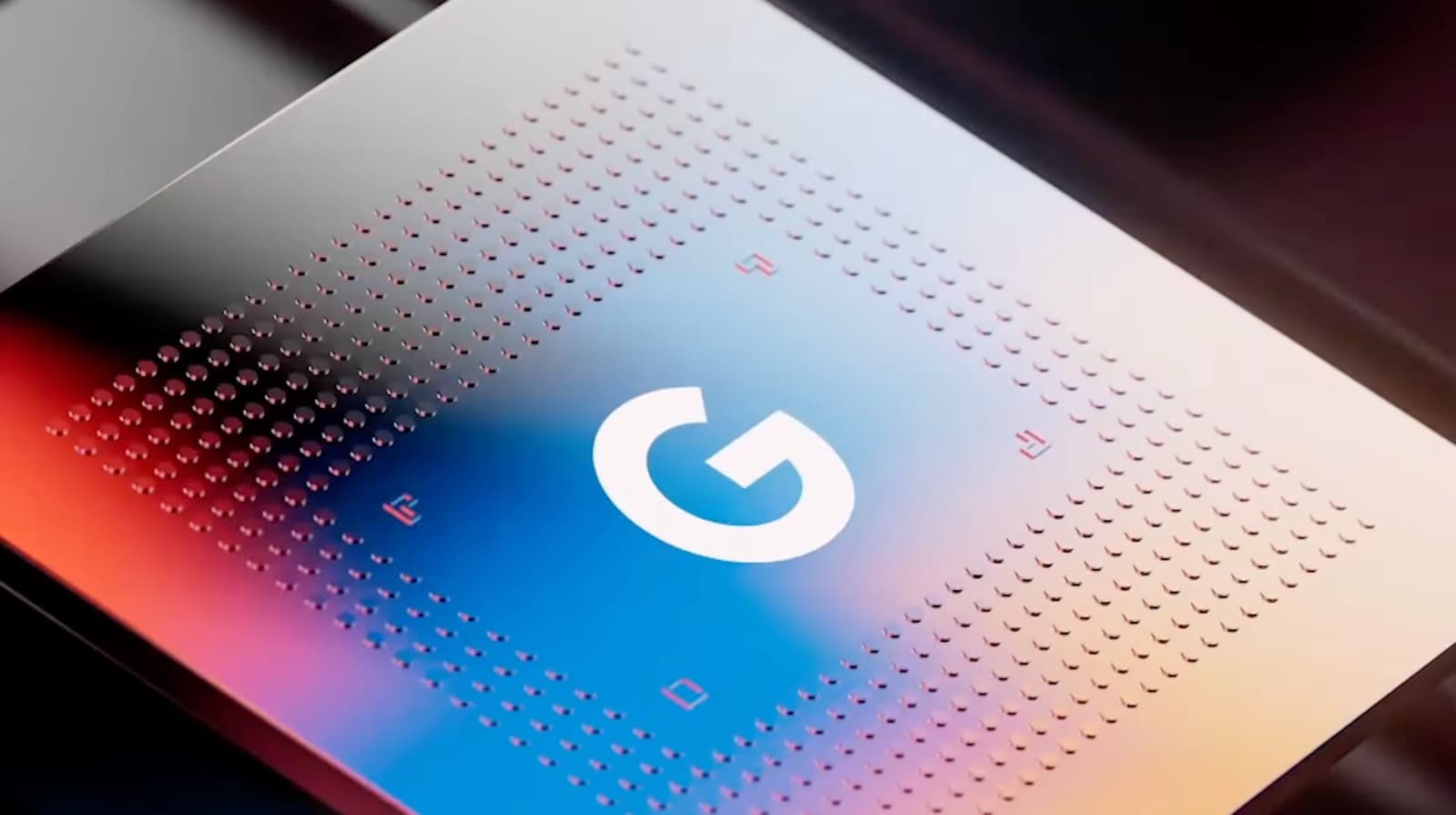
The invites for Google’s Pixel event just landed, and the leaks have already laid out a stacked rundown of the Google Pixel 11 and Tensor G6.
Tech forums have already made up their minds. Going by the leaks, the G6 looks like a regression. The G6 comes up short on CPU cores, and its graphics hardware is past its prime.
Benchmark fans are already bidding it farewell, calling it outmatched by what Qualcomm or Apple are shipping.
The Pixel 11 is unlikely to be the perfect Android phone, but the evidence suggests Google is building its silicon around what Pixels actually need.
The CPU is what everyone’s worried about. Most Android flagships today run eight-core designs, while the Tensor G6, codenamed Malibu, reportedly settles for seven.
A missing core looks like a shortfall on a spec sheet, but that misses the point.
The prime core is reportedly an ARM C1-Ultra running at 4.11 GHz, joined by four C1-Pro cores at 3.38 GHz and two more C1-Pro cores clocked down to 2.65 GHz.
To pull this off, Google leapfrogs a full ARM generation.
The GPU stirs the same nerves. The leaks point to a dated PowerVR architecture whose roots trace to 2021.
To a spec-sheet warrior, that reads like surrendering mobile gaming to Snapdragon. But judged by daily use, this looks like the right call for Google to make.
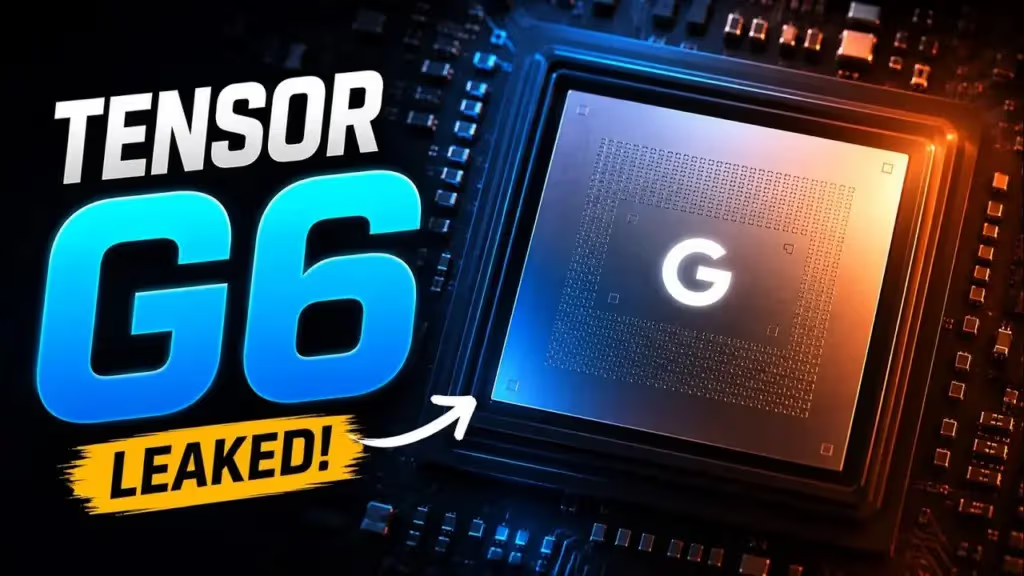
Chasing peak numbers, peak FPS, peak Geekbench runs, and peak whatever comes next hurts the actual tech experience, and these metrics arguably deserve to be retired.
Efficiency and how a device holds up in real daily use matter more than headline figures, and Apple’s M-series chips remain the clearest example of why.
A phone built to chase peak figures gets hotter, hot phones throttle, and battery life degrades.
Google’s track record here hasn’t been great. Dropping a CPU core and stepping back from extreme graphics performance sounds like a sensible correction.
Tune a chip for sustained output instead, and it finally holds up through a long ride in a hot car with Android Auto running. And while on the topic, the node choice matters too.
Reports have the Tensor G6 on TSMC’s N2 (2nm) node, which means more transistor density. There are two paths a manufacturer can take with that headroom.
Crank up clocks for higher benchmark scores and keep battery life flat, or keep performance level and stretch how long it lasts.
Google appears to be choosing the latter, which arguably matters far more than marginally better gaming performance.
The star silicon in the Pixel 11 is its modem. Connectivity has been the Pixel line’s fatal flaw.
Leaning on Samsung Exynos modems led to weak-signal battery drain and unreliable hotspot behavior.
The Tensor G6 finally ditches Samsung for a MediaTek modem.
A phone modem is always working. It scans for towers and satellite signals. An inefficient one bleeds the battery even when the screen is off.
Moving to the M90 should end the idle drain that has irritated Pixel owners for years.

Google still needs enough silicon muscle to run the features that sell Pixels.
Leaks point to a new TPU codenamed Santafe built for on-device AI, alongside a fresh image signal processor called Metis.
The C1 cores come with SME2 extensions baked in to handle AI inference at lower power. But the chip also has to feed data from the 50-megapixel primary sensor without hiccups.
All of that work eats memory, and this is where the leaks start to raise concerns. The base Pixel 11 reportedly ships with only 8GB of RAM.
Running on-device Gemini models alongside heavy computational photography on 8GB of RAM looks like a stretch.
Never mind Gemini Intelligence, which Google says needs at least 12GB. All the Tensor G6’s efficiency gains could be undermined by constant app reloads and stuttering background tasks.
Phones have long been graded on core counts and benchmark numbers. The G6 leaks suggest Google is done playing to that scorecard, and for the chip itself, that looks like the right call.
But efficiency has a ceiling, and silicon-carbon batteries are where a rival gets to ask, “Why not both?”
Somewhere in Shenzhen, a OnePlus engineer is reportedly fitting a 7,300mAh silicon-carbon battery into a phone thinner than a Pixel.
Whether Apple, Samsung, and Google eventually follow suit remains to be seen.

Robert Haba is the founder and editor-in-chief of Droid Tools. A lifelong gadget enthusiast with over a decade following the Android ecosystem, he built this publication to cut through the noise and give readers honest, real-world coverage of the tech they actually use.

Samsung tests the 2nm Exynos 2700 for the Galaxy S27 series, aiming for 12% faster speeds and lower processor costs than Qualcomm components.

The iVANKY ultra-slim magnetic power bank is 50% off at Walmart for $15, providing 20W wired and 7.5W wireless charging in a 0.3-inch thick design.
Samsung's Galaxy S27 RAM options may include 8GB variants to offset rising memory prices, alongside potential storage tier differences.

Android 17 QPR 3 Beta 2 lets Pixel owners lock Quick Settings connectivity to prevent thieves from disabling network tracking on stolen phones.
The next story loads as you reach the end. You can also load it using the button.



Comments & Discussions
Join the conversation! We use Disqus to handle comments. Click the button below to load the comment section.