

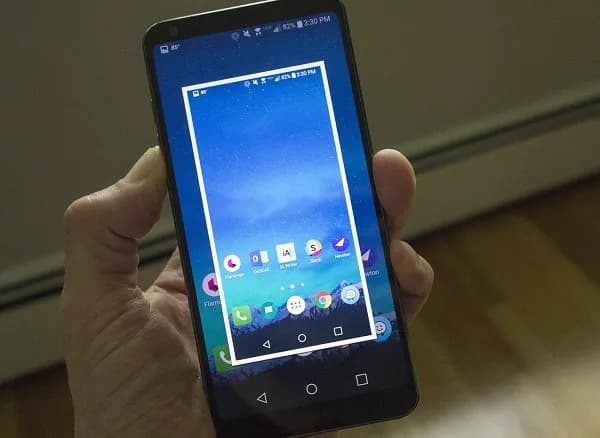
The freedom to do whatever you want is one of the key reasons why many tech enthusiasts prefer Android to other mobile operating systems. You may install anything and alter almost every aspect of your phone using Android.
Despite all of this, there are still some things you are unable to perform. For instance, some apps decide to prohibit you from taking screenshots of the app for a variety of reasons. Then again, you might still want to grab a screenshot for a variety of reasons. Continue reading to see how to get around this limitation.
Why these restriction?
Despite how annoying it is, developers don’t prevent screenshots without a good cause. There is always some justification, whether it be for security or privacy.
For security concerns, the majority of banking and payment apps prohibit screenshots. For privacy reasons, Chrome disables screenshots in Incognito tabs and windows. Another example would be the non-screenshottable self-destructing images on Telegram.
You are still permitted to capture screenshots wherever you wish, despite the developers’ decision to limit them. Simply get your hands a little bit messy.
There are various methods for taking screenshots in apps that don’t let you. Some methods work in most apps though not all. Here we take a look at two of these methods: One easy method which works in some cases, and an advanced method that should work every time.
1. Google assistant can helps you
Some Android apps that prevent screenshots only prevent your phone’s screenshot button combination from working. This indicates that if you take a screenshot using a technique other than tapping the button combination, you can get around the restriction.
Google Assistant is a built-in app in most Android phones that lets you capture screenshots without using the button combination.
- Open the app that you want to screenshot.
- Activate Google Assistant. You can do this by saying Hey Google! or holding the home key depending on your settings.
- Say or type Take a screenshot. Google Assistant will now capture a screenshot.
This approach, despite being straightforward, has little chance of working because it has been anticipated by the majority of apps that take screenshot blocking seriously. For instance, if you ask Google Assistant to take a screenshot of a Chrome Incognito tab, all that will appear on the screen is a black screen.
Continue reading the following section where we’ll explain a method that allows you to take a screenshot of any app on your phone if this one didn’t work for you.
2. scrcpy
This is the ultimate method as it can bypass virtually any sort of screenshot restriction in Android apps. scrcpy is a lightweight screen mirroring program that lets you view and control your Android phone’s display on your PC. Once you mirror your Android phone’s screen on your computer, you can simply use print screen or Snipping Tool to take screenshots.
scrcpy is available on Windows, macOS, and Linux. You can install scrcpy with Homebrew on macOS. Check the download link below for more details on installing scrcpy on Mac and Linux.
As for this article, we’re going to install scrcpy on Windows, which you can do using Scoop. Read our article on how to install Scoop to get started.
Download: scrcpy (Free)
Once you have Scoop installed, it’s time to install scrcpy.
- Open Command Prompt. You can do this by searching for cmd in the Start menu.
- Once inside Command Prompt, run the following command: scoop install scrcpy
- This command will call on Scoop to install scrcpy. This can take a while depending on how fast your connection is.
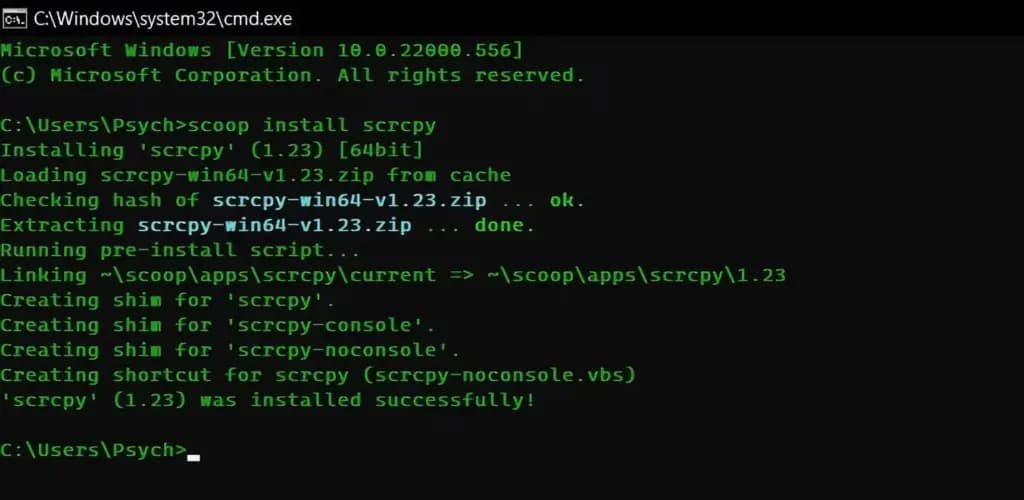
Now that you have scrcpy installed the next stage is preparing your phone. For scrcpy to access your phone’s screen, you need to enable USB debugging on your Android device. You need to have Developer mode enabled to do this.
- Go to Settings on your Android phone.
- Scroll down to the bottom and select Developer options.
- Tap the switch next to USB Debugging to change it to On.
Now both your phone and your computer are ready. Connect your phone to your computer’s USB and let’s get to the final steps.
- Open Command Prompt.
- Type in the command scrcpy and press Enter.
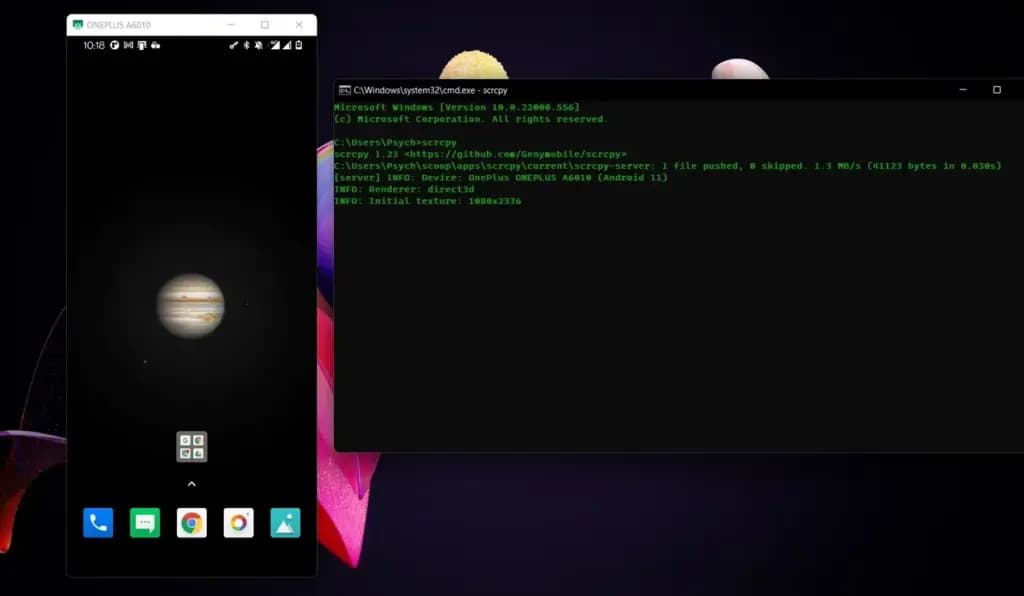
Your phone’s screen will be visible in an emerging window. Through this window, you may even navigate and type on your phone using the mouse and keyboard from your computer. You can freely take screenshots using print screen and other screen capture techniques now that the screen of your phone is mirrored onto your computer.
Anything and Everything
Even while some apps try to prevent you from taking screenshots within the program, if you’re determined to capture your screenshots, they will ultimately fail. Now that you’ve read this post, you know how to screenshot any program, despite any limitations. After all, it’s your phone, so you should be able to use it anyway you like.


Google Pixel 9

Google Pixel Watch 4

Keep Reading
Six days after Android 17’s stable rollout began on June 16, a growing number of Pixel owners are dealing with a touchscreen bug that makes their devices genuinely unreliable. Swipes invert direction, taps either fail to register or fire multiple times, and screens go briefly unresponsive before recovering. Google has confirmed the bug and says […]
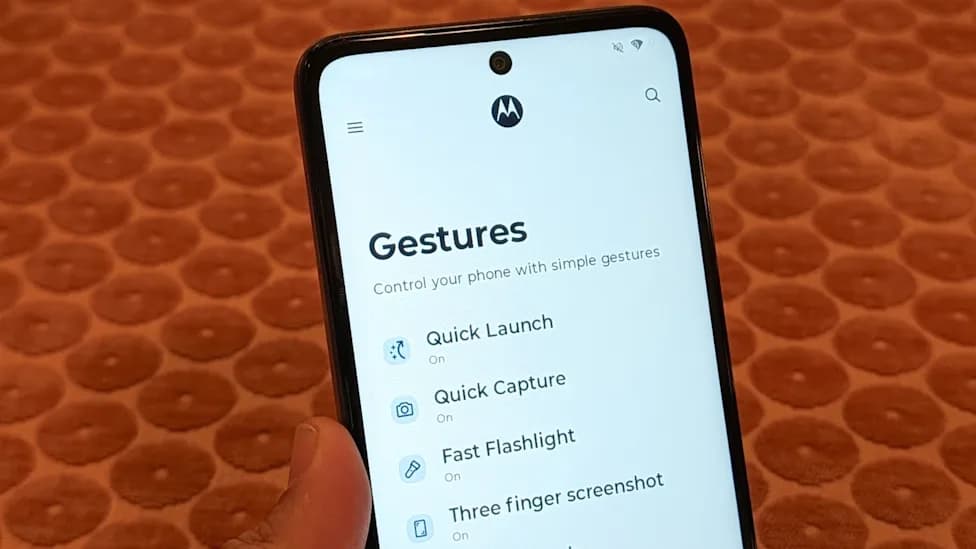
Motorola Quick Launch lets users double-tap the back of the phone to trigger a custom action without touching the screen. According to AT&T’s support documentation for the Razr+ 2025, when Quick Launch is enabled, that double-tap can perform actions like taking a screenshot or returning to the home screen. That specific wording — “certain options […]
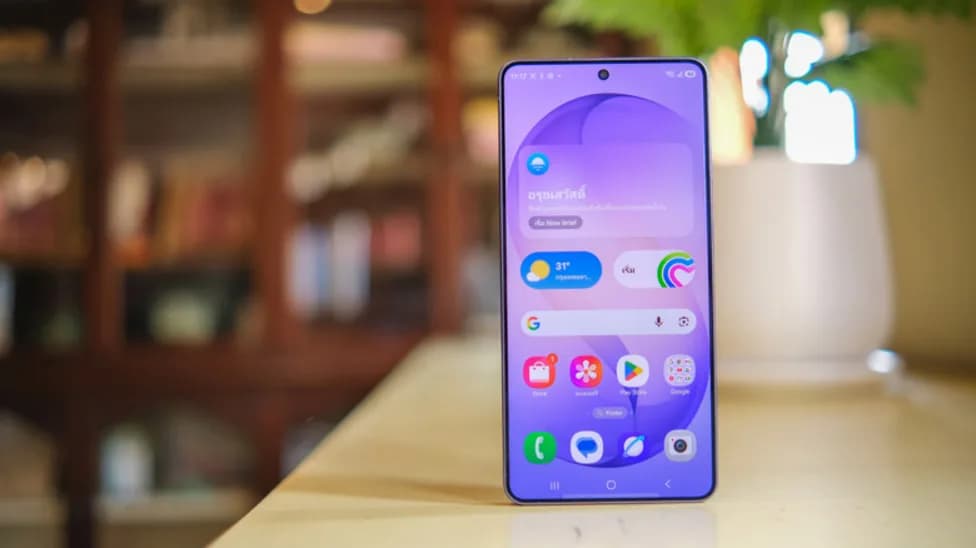
If a Samsung phone occasionally shows a small flashing dot – or several – on the display, the proximity sensor is almost certainly the cause. These dots typically appear near the top center of the screen and become most visible during phone calls, when the under-display sensor is actively working. It’s worth distinguishing these from […]
Samsung builds the Galaxy Watch on the assumption that most people want some level of health and fitness tracking. That may be true for many users – but even if it describes you, there are several health settings running in the background that you might never actually check. If that data isn’t being used, there’s […]
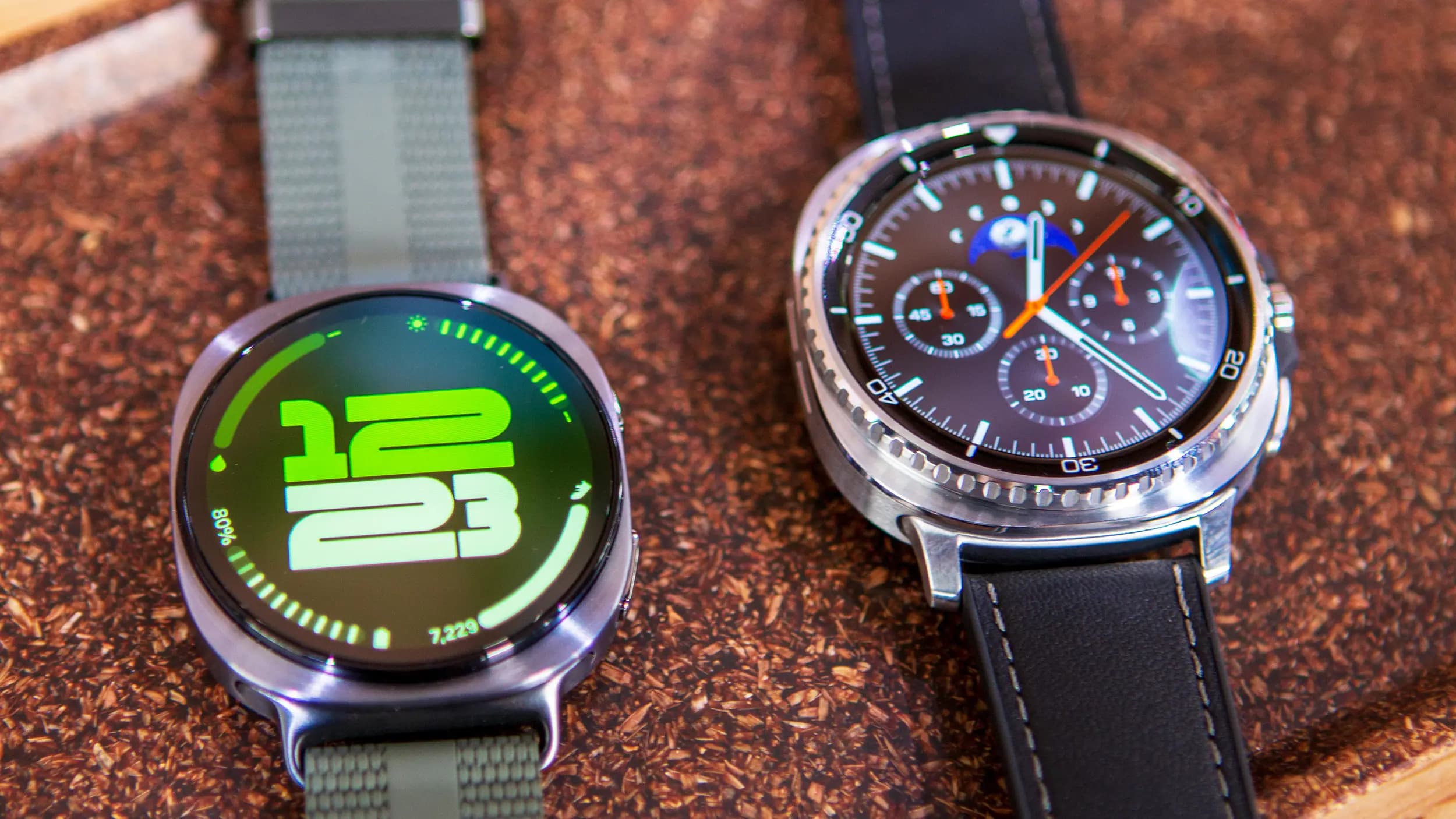
Portable tech exists on a spectrum. A desktop setup stays home. A laptop travels. A phone handles the street-level stuff. And when even pulling out a phone to skip a song feels like too much effort, a smartwatch steps in. It’s the layer of tech that lives on your wrist, always available without the friction. […]
Before USB-C came along in 2014, smartphones relied on mini USB, micro USB, or Apple’s proprietary Lightning port. Android devices made the switch to USB-C early on — the Nokia N1 tablet was one of the first devices to feature the reversible connector — and Apple eventually followed suit, dropping Lightning with the iPhone 15 […]
Comments & Discussions
Join the conversation! We use Disqus to handle comments. Click the button below to load the comment section.