Xiaomi has started the stable HyperOS 4 rollout in China for select Xiaomi, Redmi, and tablet models, introducing memory preloading and load calculation through its HyperCore kernel. The company has not announced an official global release date, leaving international users waiting for confirmed availability.
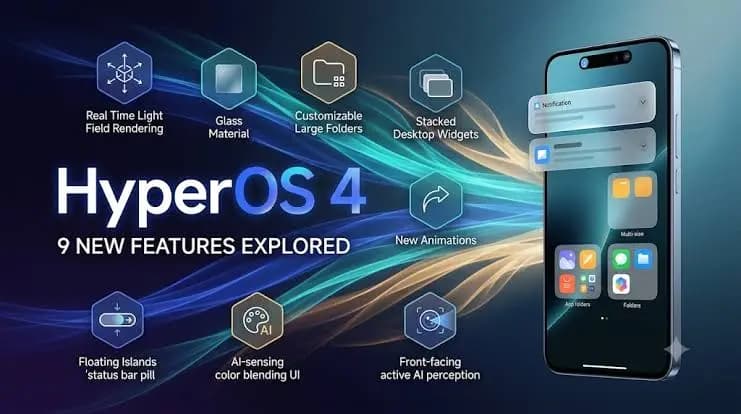
Xiaomi has started distributing the stable HyperOS 4 rollout in China following months of beta testing. The new operating system release focuses on system performance, revised memory management, and quicker app loading. Xiaomi also trimmed decorative visual elements and excess animations for a cleaner display. While the stable software is now arriving on select smartphones and tablets domestically, the company has not announced an official release schedule for international regions. Users outside China must wait for further details from the manufacturer.

In China, the stable build is reaching select flagship handsets and tablets first. According to rollout details, the eligible models include the Xiaomi 17 series, excluding the Xiaomi 17 Max. The Xiaomi 17T and Xiaomi 17T Pro are also eligible. Redmi devices in the rollout include the Redmi K100 Pro, Redmi K100 Max, Redmi K90, and Redmi K90 Pro Max. Tablet users receive the update on the Xiaomi Pad 8 and Xiaomi Pad 8 Pro. Because availability varies by device, users should check their phone settings in the software update section to see if the build has arrived.
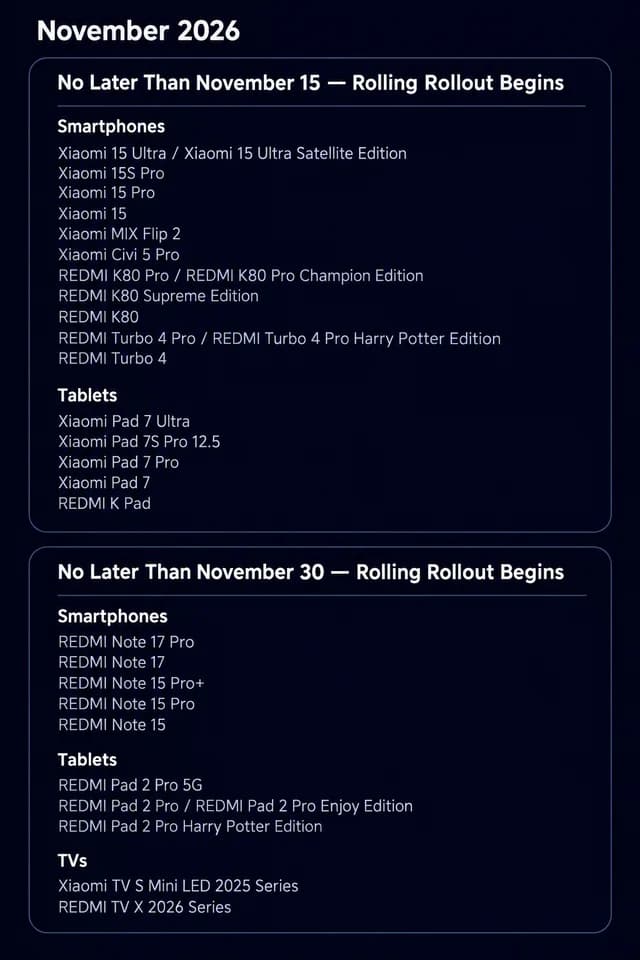
This rollout follows an extensive test phase that began when Xiaomi opened its HyperOS 4 beta program in China on August 14, 2026. The company expanded beta testing to international users in September. A second global beta batch added support for the Xiaomi 15, Xiaomi 15 Ultra, Xiaomi 17T, and Xiaomi 17T Pro. For now, the stable release remains limited to China. Xiaomi has not confirmed when other markets, including India, will receive the final software.
The update focuses on resource scheduling through Xiaomi’s in-house HyperCore kernel, which first appeared in HyperOS 2. HyperOS 4 builds on that setup with two key additions: load calculation and memory preloading. Memory preloading helps applications launch more quickly by preparing assets in advance. Meanwhile, load calculation balances computing tasks to manage device workloads more efficiently. The updated operating system also aims to lower latency and deliver more responsive display transitions.
Beta testers observed smoother navigation and fewer delays during early previews, though day-to-day results can vary depending on the device. For now, Xiaomi users outside China must await a confirmed schedule, as the company has not yet provided a timeline for a wider international release.

Google Pixel 11 Pro

Cristian Penisoara is a Guides Writer and Android specialist at Droid Tools. An Android user since version 2 and a professional event photographer, he combines technical curiosity with a detail-oriented approach - every guide he publishes is tested step-by-step on a real device before it goes live.

Three One UI 9.5 test builds have surfaced for the Galaxy S25, with leaks pointing to app redesigns and a beta starting later this month or early next month.

The November Pixel Drop expands Gemini tools to the Pixel 10 series, brings Pixel Search to older models, and arrives alongside the $29.99 Pixel Tag.
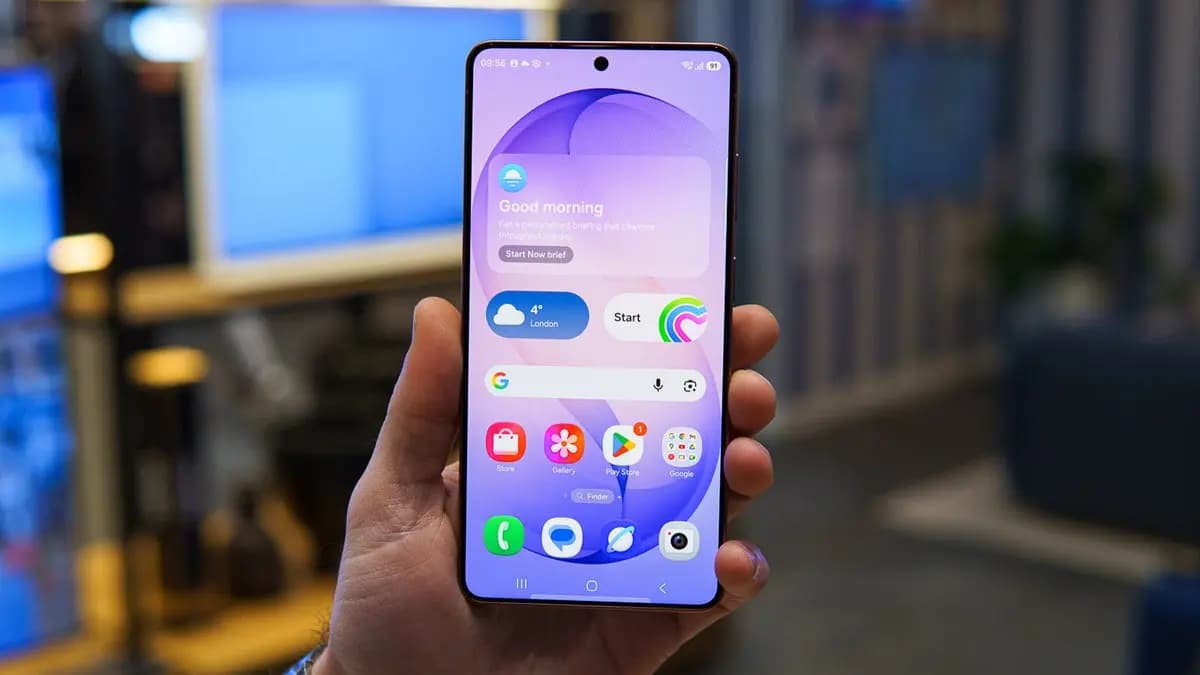
Samsung is rolling out the stable Android 17-based One UI 9 update to the Galaxy A06 5G, Galaxy A07 5G, and Galaxy XCover 7 across select Asian markets.

The Android 17 ColorOS 17 update arrives on six more OnePlus devices this month, with 13 more expected in December and Q1 2027 as OxygenOS officially ends.
The next story loads as you reach the end. You can also load it using the button.


Comments & Discussions
Join the conversation! We use Disqus to handle comments. Click the button below to load the comment section.