

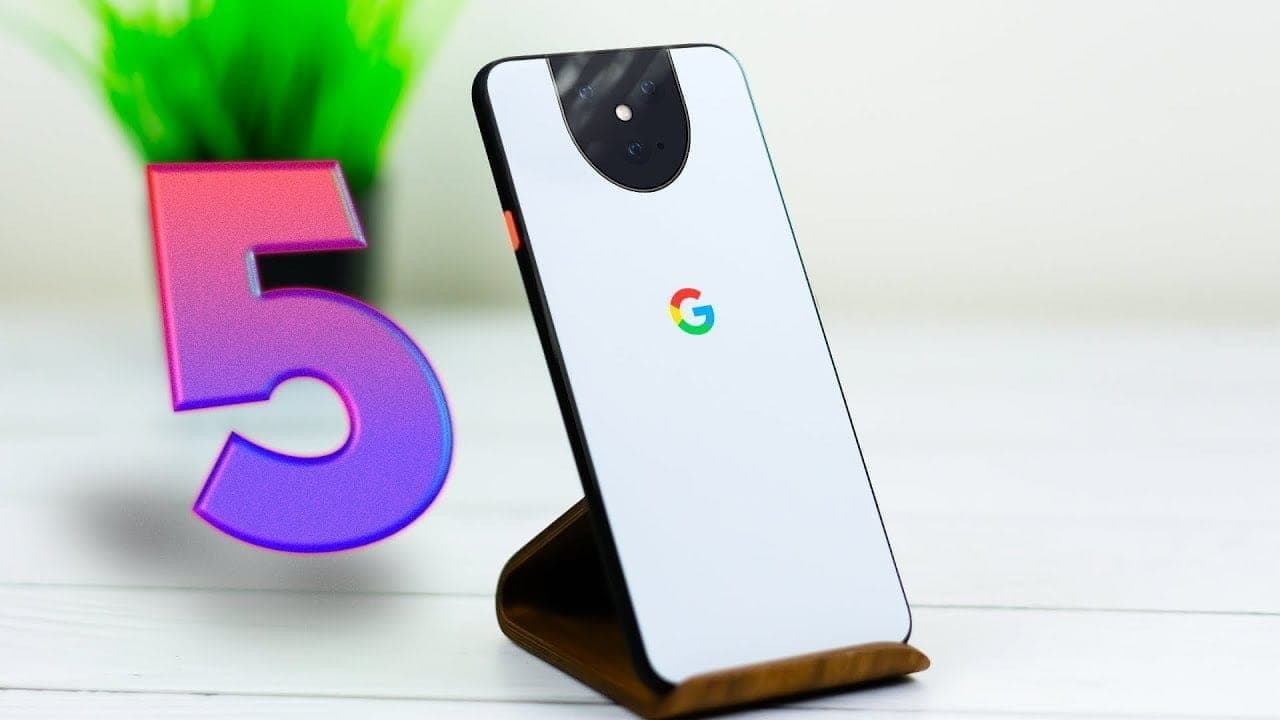
Back in March, we discovered a report indicating that the forthcoming Google Pixel 5 might not deliver the typical flagship experience we’ve become used to.
Specifically , the report indicated that the phone would not have a Qualcomm 800-series Snapdragon chipset and would have a mid-range processor instead. Now, we’ve got even more proof to support the argument that XDA Developers. While it’s not 100 percent clear which processor the Google Pixel 5 will use, it’s increasingly likely that the processor won’t be the flagship this year, the Qualcomm Snapdragon 865.
Since we recently found a rumor suggesting the Pixel 5 entry price could be as low as $699, all signs point to the new Pixel stepping out of the traditional premium territory and entering something more like “premium midranger” territory.
Maybe the SD765?

Through some complicated code-sleuthing, XDA has been able to determine that it is very unlikely that the Snapdragon 865 will be in the Google Pixel 5. It was not, however, able to decide exactly what processor would be in the phone instead, with some certainty. XDA ‘s guess based on the evidence available is that the new Pixel could include a Snapdragon 765. This would align very well with the telephone’s expected price and also allow the 5G-capable Pixel 5, which Google would need to remain competitive with.
However, the SD765 also has two different processors: the Snapdragon 765 G and the Snapdragon 768G. The former is the processor’s gaming-centered version, while the latter is a slightly improved variant of that. Because all three are using the same sockets and software, Google could (theoretically) offer any of them in the Google Pixel 5 without having to alter much in software and hardware matters.
It can not be stressed enough that, at the moment, this is all rumor and speculation. All we know for certain at this point is that there is plenty of evidence to suggest that there will be no SD865 in the Google Pixel 5 and the likely replacement would be an SD765/765G/768 for that.


Google Pixel Watch 4

Google Pixel 9

Samsung Galaxy Watch 8


Keep Reading
WhatsApp is finally addressing one of the biggest gaps in its web client, as WhatsApp Web now supports audio and video calls. This requires no download or installation, since it’s built directly into WhatsApp Web, which has also picked up support for screen sharing, reactions, and a dedicated Calls tab showing full call history and […]
While the Pixel 9 lineup is still fresh, with its Tensor G4 chip and sleek hardware, new reports are already surfacing about the Pixel 10 and Pixel 11. For anyone who held off on the Pixel 9 series hoping for a bigger internal upgrade from Google, there may be good news on the horizon. Google […]

Practically every streaming service not named Netflix has turned to bundling over the past few years, with competitors teaming up to deliver combo packs like Disney+ and HBO Max. No service has been bundled quite as often as Peacock, though, and YouTube Premium subscribers are now joining the long list of ways to gain access […]

The invites for Google’s Pixel event just landed, and the leaks have already laid out a stacked rundown of the Google Pixel 11 and Tensor G6. Tech forums have already made up their minds. Going by the leaks, the G6 looks like a regression. The G6 comes up short on CPU cores, and its graphics […]

Google is set to unveil the Pixel 11 family on August 12, and just ahead of that event, the company’s VP of Devices and Services, Shakil Barkat, has confirmed what many were expecting: prices are going up across the lineup. Google Confirms Pixel Price Adjustments Barkat explained that, like other consumer tech companies, Google is […]

Google released its first official Pixel 11 Pro teaser today, confirming a gold finish and giving the clearest look yet at Pixel Glow – the light-up feature Google is betting on to differentiate itself from rivals like the iPhone 17 Pro Max. The Made by Google event is set for August 12. What Google actually […]

Comments & Discussions
Join the conversation! We use Disqus to handle comments. Click the button below to load the comment section.